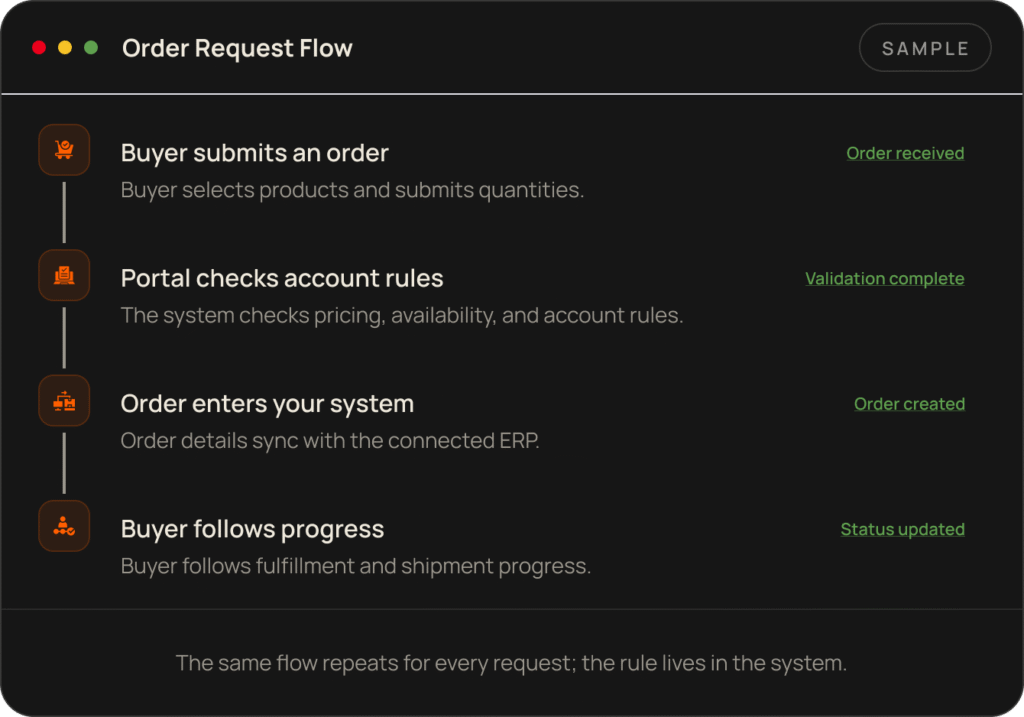
Routine B2B transactions can move online without requiring sales representatives to handle every request. Buyers can find products, check their account terms, place orders, and track fulfillment themselves, while your team steps in when a transaction needs expertise or approval.
Your B2B portal handles the customer-facing ordering experience while your ERP manages core business operations. Connecting the two keeps your customer and order data aligned across your workflow.
Contract rates, negotiated prices, volume discounts, and account-level pricing reflect each buyer’s agreed purchasing terms and requirements.
Multiple SKUs and quantities fit into a single order, making high-volume purchasing quicker and reducing repetitive entry.
A centralized catalog brings together SKUs, specifications, technical documents, and product information for easier product selection.
Company accounts accommodate multiple users, defined roles, purchasing permissions, and account-level access controls.
Current stock information appears during the ordering process, giving buyers visibility before they commit to purchases.
PO references, spending limits, and approval steps keep purchasing requirements within established account controls.
Previous purchases remain accessible, with frequently ordered products available for faster repeat purchasing.
Custom product or quantity requests move from quotation through approval and into an order within the same workflow.
Order status, shipment progress, delivery updates, and related documents remain accessible throughout the fulfillment process.
Your distributors can access the products and commercial terms relevant to their accounts, then place high-volume orders online.
Dealers get an ordering experience that reflects their approved products, pricing, purchasing limits, and account permissions.
Wholesale buyers can place larger orders, manage recurring requirements, and use quantity-based pricing without relying on your sales team.
For complex products, buyers can submit specifications, request quotes, and complete required approvals before ordering.
Organizations with multiple branches can manage purchasing from one account while keeping access and purchasing rights separated by location.
Phone calls and spreadsheets no longer dictate the workflow, reducing repetitive work across routine B2B purchases.
Fewer manual entries mean fewer mistakes with SKUs, quantities, account details, and negotiated pricing.
Buyers can move from product selection to checkout faster, without waiting for routine assistance from sales teams.
Routine purchases happen online, while buyers handle reorders, account details, and fulfillment updates independently.
Sales representatives spend less time on routine requests and more time developing accounts and identifying new opportunities.
As order volumes grow, your team can handle more transactions without adding the same level of administrative effort.